
🕸️ How to contact Stephen King:
Start Your FREE 7-Day Trial to get Stephen King’s email, mailing address, agent, manager & publicist.
Get Instant Access to our Private Online Database of 59,000+ celebrities, influencers, & public figures with full contact details including verified email addresses & phone numbers.
Stephen King’s Contact Information
Table Of Contents:
- Stephen King’s Contact Information
- Stephen King’s Favorite Books
- How To Meet Stephen King
- Stephen King’s Email Address
- Stephen King’s Fan Mail Address
- Stephen King’s Agent
- Stephen King’s Manager
- Stephen King’s Publicist
- Frequently Asked Questions (FAQ)
- About The Author
- Stephen King’s Former Contact Information
🕸️ Contact Stephen King on his Official Site (Email), TikTok, Twitter & YouTube.
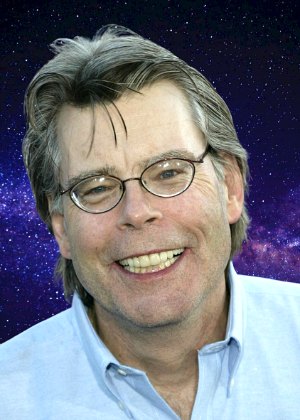
Email Stephen King on his Official Site or care/of his agent, manager, or publicist.
Meet Stephen King at one of his book signings, movie/TV show premieres, live events, meet-and-greets, or bidding on a charity auction.
Send your autograph request and a self-addressed stamped envelope to get Stephen King’s autograph. Send Stephen King a fan mail letter care/of his office address:
Stephen King
c/o The Stephen & Tabitha King Foundation
47 W. Broadway
Bangor, ME 04401
Stephen King’s literary agency is:
Darhansoff & Verrill Literary Agents
275 Fair St. #17D
Kingston, NY 12401
Stephen King’s management is:
Rand Holston
c/o Rand Holston Management
Los Angeles, CA
Stephen King’s publicist is:
Simon & Schuster
c/o Public Relations Dept.
1230 Ave. of the Americas
New York, NY 10020
Stephen King’s Favorite Books
Contact Stephen King plus 59,000+ celebrities, influencers, and public figures using our online database.
- Bleak House – Charles Dickens
- War and Peace – Leo Tolstoy
- Infinite Jest – David Foster Wallace
- The Lord of the Rings trilogy – J.R.R. Tolkien
- Paradise Falls – Don Robertson
- The Winds of War – Herman Woulk
- Hurry Sundown – K.B. Gilden
- The Sword of Honor trilogy – Evelyn Waugh
- The Raj Quartet – Paul Scott
- A Dance to the Music of Time – Anthony Powell
* Adapted from Men’s Health, November 2011. As an Amazon Associate, we may earn a commission.
How To Meet Stephen King
Contact Stephen King plus 59,000+ celebrities, influencers, and public figures using our online database.

Meet Stephen King at one of his book signings, movie/TV show premieres, live events, meet-and-greets, or bidding on a charity auction.
Stephen King’s Email Address
Contact Stephen King plus 59,000+ celebrities, influencers, and public figures using our online database.
- Email Stephen King care/of his agent, manager, or publicist.
Stephen King’s Fan Mail Address
Contact Stephen King plus 59,000+ celebrities, influencers, and public figures using our online database.
Send your autograph request and a self-addressed stamped envelope to get Stephen King’s autograph. Send Stephen King a fan mail letter care/of his office address:
Stephen King
c/o The Stephen & Tabitha King Foundation
47 W. Broadway
Bangor, ME 04401
If you prefer to communicate with Stephen King through traditional mail, you can send a letter to his official mailing address.
When sending a letter, include a self-addressed stamped envelope if you hope to receive a response.
Remember that it may take several weeks or even months to receive a response, as Stephen King is a busy individual with a demanding schedule.
In conclusion, contacting Stephen King may seem daunting, but it’s possible if you know the right channels to use.
Whether you contact his agent, reach out to him on social media, or send a letter to his mailing address, be respectful and concise in your message.
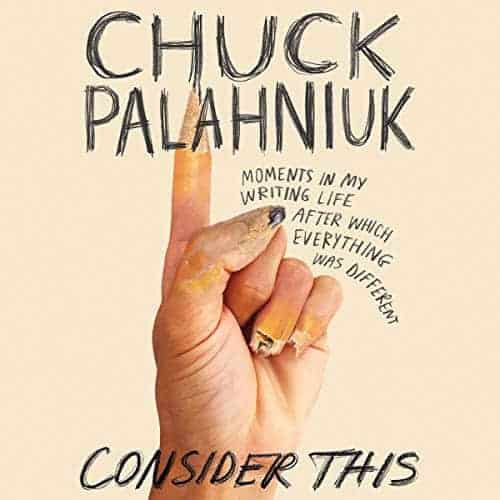
Here’s a funny story about a Stephen King book signing from Chuck Palahniuk, the author of ‘Fight Club‘:
“To snag a Stephen King event, Kim said she’d had to agree to his standard terms. She’d had to hire bodyguards and find a venue holding five thousand people.
Each person could bring three items to have autographed by Mr. King. The event would last some eight hours, and someone would have to stand beside the signing table and hold an ice pack to the author’s shoulder for the duration.
The day arrived, and Kim held the ice pack to the shoulder in question. The venue, Town Hall, a deconsecrated church on Capitol Hill, has a jaw-dropping view of downtown Seattle. It was filled with five thousand mostly young people, all ready to wait hours for their signatures.
King sat and began to sign autographs. Kim stood holding the ice pack to his pesky shoulder. Not a hundred books into the eventual fifteen thousand, Kim said that King looked up at her and asked, “Can you get me some bandages?”
He showed her his signing hand, how the skin along the thumb and index finger had fossilized into a thick callus from a lifetime of marathon book signings. These calluses are the writer’s equivalent of a wrestler’s cauliflower ear. Thick as the armor on the hide of a stegosaurus, the calluses had begun to crack.
“I’m bleeding on the stock,” King said. He showed fresh blood smudged on his pen and a partial fingerprint of blood on the title page of a book belonging to a waiting young man who didn’t appear the least bit distressed to see his property stained by the vital fluids of the great wordsmith and teller of tales.
Kim started to step away, but it was too late. The next person in line had overheard the exchange and shouted, “No fair!” He shouted, “If Mr. King bleeds in his books, then he has to bleed in mine!” This, everyone in the building heard.
Shrieks of indignation filled the cavernous hall as five thousand horror fans each demanded their own ration of celebrity blood. Echoes of rage boomed off the vaulted ceiling. Kim could scarcely hear as King asked, “Can you help me out?” Still pressing the ice pack against him, she said, “They’re your readers I’ll do what you decide.”
King went back to signing. Signing and bleeding. Kim stayed beside him, and as the crowd saw that no bandages were forthcoming, the protest gradually subsided. Five thousand people. Each with three items.
Kim told me that it took eight hours, but King managed to sign his name and smear a trace of his blood in every book. By the end of the event, he was so weak the bodyguards had to carry him under the armpits to his Lincoln Town Car.
Even then, as the car pulled out to deliver him to his hotel, the disaster wasn’t over. A group of people who’d been shut out of the event because of overcrowding jumped into their own car and chased King’s. These book lovers rammed and totaled the Lincoln — all for the opportunity to meet their favorite author.”
— ‘Consider This: Moments in My Writing Life After Which Everything Was Different‘ by Chuck Palahniuk
Stephen King’s Agent
Contact Stephen King plus 59,000+ celebrities, influencers, and public figures using our online database.
Stephen King’s literary agency is:
Darhansoff & Verrill Literary Agency
275 Fair St. #17D
Kingston, NY 12401
The most reliable and efficient way to contact Stephen King is through his literary agency.
The author’s agent manages his schedule, negotiates book deals, and handles other business-related matters.
Chuck Verrill represented Stephen King since the mid-1970s and was instrumental in negotiating some of King’s most lucrative publishing deals.
Verrill has a long history of representing some of the biggest names in the publishing world and has been recognized for his contributions to the industry.
In addition to representing King, he has worked with authors such as Tom Clancy, Michael Crichton, Barbara Kingsolver, and more.
King has often spoken highly of Verrill, and the two have developed a close relationship. King has dedicated several books to Verrill, including “The Stand,” “The Dark Tower,” series, and “Holly.”
Verrill was instrumental in helping King adapt his work for the screen and negotiated many deals for King’s most successful film and television adaptations.
Verrill played a significant role in King’s success and was considered one of the most influential literary agents in the business. He passed away in 2022.
Stephen King’s Manager
Contact Stephen King plus 59,000+ celebrities, influencers, and public figures using our online database.
Stephen King’s management is:
Rand Holston
c/o Rand Holston Management
Los Angeles, CA
Stephen King’s personal manager was Marsha DeFilippo until she retired in 2020.
DeFilippo worked with King since the mid-1980s and played a key role in managing his career and helping him navigate the various opportunities that have come his way.
In addition to managing King’s career, DeFilippo produced several of his film and television projects, including the miniseries adaptation of “The Stand” and the feature film adaptation of “The Dark Tower” series.
She was King’s trusted advisor and confidante for many years and played an instrumental role in shaping his legacy as one of the most successful authors ever.
Stephen King’s Publicist
Contact Stephen King plus 59,000+ celebrities, influencers, and public figures using our online database.
Stephen King’s publicist is:
Simon & Schuster
c/o Public Relations Dept.
1230 Ave. of the Americas
New York, NY 10020
Frequently Asked Questions (FAQ)
Contact Stephen King plus 59,000+ celebrities, influencers, and public figures using our online database.
Stephen King’s writing career began with a combination of natural talent, persistence, and a bit of luck. He submitted short stories to magazines during high school but faced numerous rejections. After graduating from the University of Maine, King worked as a high school English teacher while continuing to write and submit his work. His breakthrough came when he sold his first novel, “Carrie,” in 1973. Doubleday picked up the book and later became a commercial success, especially after the film adaptation’s release. The success of “Carrie” allowed King to focus on writing full-time, setting the stage for his prolific career as a best-selling author.
Stephen King blurbs a lot of books. However, your publisher probably needs to have a connection with his publisher to get your book to him. See Entertainment Weekly’s ‘Stephen King on the Art of the Blurb.’
Stephen King moved to Bangor, Maine, in 1979, and the town has since significantly influenced his writing. He chose Bangor as a place to live and work because he found it to be a good representation of a typical American town with a unique blend of characteristics, making it an ideal backdrop for stories. King often uses Bangor to inspire the fictional towns in his novels, such as Derry in “It” and “Insomnia.” He and his wife, Tabitha, also founded a radio station and a charitable foundation in Bangor. The town’s culture, history, and people have deeply influenced King’s work, making it an integral part of his life and creative process.
Stephen King and actor Bill Skarsgård met through the production of the 2017 and 2019 film adaptations of King’s novel “It,” where Skarsgård played the role of Pennywise the Clown. It’s common for authors to meet the cast during production or promotional events of adaptations of their works. Given that “It” was a high-profile project and King generally supported the adaptation, it is reasonable to assume that they interacted during the movie’s filming, post-production, or promotional stages.
Stephen King did not “meet” Billy Summers; Billy Summers is a fictional character created by King for his novel of the same name, which was published in 2021. The character is a hitman and a former Marine sniper who takes on one last job before planning to retire. In creating Billy Summers, King drew from his extensive experience in crafting complex, layered characters, often with morally ambiguous traits. Like many of King’s characters, Billy Summers is a vessel through which the author explores various themes, such as redemption, morality, and the human condition. Therefore, Billy Summers is a product of Stephen King’s imagination and storytelling craft.
Stephen King met Carrie by drawing inspiration from two girls he remembered from his high school experience. One girl was bullied for her poverty, and the other for her religious fanaticism, elements King combined to create Carrie White’s character in his novel. The idea for the story came to him during a stint as a high school janitor, where he had to clean the girls’ locker room, which helped him visualize the setting for some of Carrie’s experiences. (Boston Globe)
Stephen King’s inspiration for “Christine,” the story about a possessed 1958 Plymouth Fury, came from the author’s own experience with a car. King once owned a 1958 Plymouth Belvedere, the model for the titular vehicle, Christine. King’s love for classic cars and his knack for blending the ordinary with the supernatural fueled the novel’s concept.
Stephen King’s “Cujo” is a horror novel about a friendly Saint Bernard who becomes rabid and turns into a terrifying menace. The idea for the story came to King when his motorcycle broke down, and he took it to a mechanic who had a menacing dog, although the actual dog he met was not aggressive. This real-life encounter inspired King to explore a narrative where a normally friendly dog turns into a horrifying creature, which became the basis of the novel “Cujo.”
Derry, Maine, is a fictional town created by Stephen King that serves as the setting for several of his novels and stories. The city is a stand-in for Bangor, Maine, where King has lived, and it first appeared in the short story “The Bird and the Album.” Derry is perhaps most famously known as the setting for his novel “It,” where it is depicted as a place with a dark history and the haunt of the evil entity Pennywise the Clown. The fictional town’s characteristics and locations are often based on real Bangor landmarks, which King has woven into the fabric of his fictional universe (The Guardian).
Stephen King met actress Drew Barrymore during the production of the film adaptation of his novel “Firestarter,” released in 1984. Barrymore, then a child actress, played the lead role of Charlie McGee, a girl with pyrokinetic abilities. They met during filming and promotional activities related to the movie. King and Barrymore significantly impacted the entertainment world, but “Firestarter” remains one of their early career milestones and the point where their professional paths crossed.
Stephen King never met Edgar Allan Poe, as they lived in different centuries. Poe was an American writer from 1809 to 1849, while King was born in 1947. However, King cited Poe as a significant influence on his work. Both authors are icons in the horror genre, and King has often spoken about the impact of Poe’s writing on his creative development. Although they never met in person, the legacy of Poe’s work has been a formative influence on King’s writing.
Stephen King met Elon Musk on Twitter. In April 2023, Musk announced that he was buying Twitter. King was among the many users who criticized the move, expressing concern about Musk’s plans to make Twitter more open to free speech, even if that meant allowing misinformation and hate speech to spread. King also criticized Musk’s decision to charge for Twitter’s verification checkmark, which had previously been given to high-profile accounts for free. “$20 a month to keep my blue check? F- that! They should pay me. If that gets instituted, I’m gone like Enron,” King tweeted.
Stephen King met Frank Darabont when Darabont asked King for permission to adapt one of his short stories, “The Woman in the Room,” into a short film. This was part of King’s “Dollar Baby” deal, where he allowed aspiring filmmakers to adapt his short stories for $1. Their successful collaboration on this project led to Darabont directing other King adaptations, including “The Shawshank Redemption” and “The Green Mile.”
Stephen King met George R.R. Martin at science fiction and fantasy conventions in the 1970s and 1980s. They reunited at an event in Albuquerque, New Mexico, in 2016, where they discussed their writing processes. Martin said he played poker with King and others in a group called the Rock Bottom Remainders. King said he got hooked on Martin’s books after reading them to relieve pain from a sciatic nerve issue. They also discussed writing goals and how King writes so fast. (YouTube).
Stephen King co-wrote the “Gwendy’s Button Box” series with author Richard Chizmar. The two met because Chizmar founded Cemetery Dance Publications, which has published limited-edition books by King. Their collaboration on the Gwendy series began when King sent Chizmar a story he had started but not finished, which featured the character Gwendy Peterson. Chizmar completed the story, resulting in “Gwendy’s Button Box,” the first book in the series. The success of this collaboration led to two sequels, “Gwendy’s Magic Feather” and “Gwendy’s Final Task,” completing the trilogy (Cemetery Dance).
Holly Gibney is a fictional character created by Stephen King, first appearing in the Bill Hodges trilogy, starting with “Mr. Mercedes” and later in the novel “The Outsider.” Gibney is a highly intelligent but socially awkward private investigator who becomes a key figure in solving mysteries throughout the series. King continued Holly’s story beyond these works, further developing her character in his novel “Holly,” which delved into her tackling another gruesome mystery. Holly is well-received by fans and critics because of her complexity and resourcefulness.
Stephen King never met H.P. Lovecraft, as Lovecraft passed away in 1937, and King was born in 1947. However, King greatly admired Lovecraft’s work and cited him as influencing his writing. Lovecraft’s impact on King is evident in themes like cosmic horror, the insignificance of humanity in the grand scheme of things, and the exploration of the unknown. While they never met in person due to the time gap, King’s literary work can be seen as part of the horror genre legacy that Lovecraft helped shape. The connection between the two is more intellectual and thematic than personal.
Stephen King didn’t “meet” It; “It” is a novel by King published in 1986. The concept for the story came from King’s own imagination and was inspired by various elements, including his observations of small-town life and childhood fears. The book centers around a shape-shifting, malevolent entity named Pennywise, who often appears as a clown and terrorizes the town of Derry, Maine. King mentioned in interviews that the idea for the story began with a thought about a bridge and what might be underneath it, which led him to conceive of the novel’s complex narrative. So, “It” is a creation of King’s creative process, not a separate entity he “met.”
Stephen King met Jack Nicholson when he starred as Jack Torrance in Stanley Kubrick’s film adaptation of King’s novel “The Shining,” one of the most iconic roles in film history. King famously expressed his dissatisfaction with the film and Nicholson’s portrayal. (CinemaBlend).
Stephen King met James Caan when he starred in the film adaptation of King’s novel “Misery,” in which Caan starred as the lead character, novelist Paul Sheldon. King gave Caan his approval for the role after a screening, as recounted by Caan in an interview with Entertainment Weekly during a reunion with co-star Kathy Bates (Far Out).
Stephen King met actor James McAvoy during the production of the film adaptation of his novel “It,” specifically the second part, “It Chapter Two,” released in 2019. James McAvoy played the adult version of Bill Denbrough, one of the main characters. While the specifics of their first meeting are not widely documented, it’s common for authors to meet actors during table reads, set visits, or promotional events for film adaptations of their works. King and McAvoy have spoken positively about the adaptation, and McAvoy has expressed his admiration for King’s writing in interviews.
Stephen King created “Joyland” as a novel published in 2013. The story is set in a small-town amusement park in North Carolina and follows the experiences of a college student, Devin Jones, who takes a summer job at the park and becomes involved in the legacy of a murder. As with many of his works, King drew from his imagination and experiences to craft the story, which was published by Hard Case Crime, a line of books known for hardboiled crime novels.
Stephen King met J.K. Rowling through literary circles and events. King reviewed Rowling’s work positively, and they were seen together at events like the 2007 British Book Awards.
Stephen King didn’t “meet” author Joe Hill in the conventional sense, as Joe Hill is Joseph Hillstrom King, Stephen King’s eldest son. Born on June 4, 1972, Joe Hill chose to use a pen name to separate his work from his father’s reputation and independently make a name for himself. Joe Hill has become a successful writer in his own right, penning novels like “Horns” and “NOS4A2,” as well as the comic book series “Locke & Key.” Both father and son have collaborated professionally and share a close personal relationship, often appearing together at literary events and discussions.
Stephen King met John Grisham at literary events. One event was a fundraiser for the Book Industry Charitable Foundation, where they discussed their writing and careers.
Stephen King met John Travolta through the film adaptation of King’s novel “Carrie.” Travolta played the character Billy Nolan in the 1976 film, one of his early roles that helped establish his career in Hollywood. The movie “Carrie” is a significant part of King’s and Travolta’s professional histories.
Stephen King met Julianne Moore when she starred in the Apple TV+ adaptation of King’s novel “Lisey’s Story,” which he adapted for the screen. King’s hands-on involvement in the adaptation process led to interactions with Moore, who played the titular character, Lisey Landon.
Stephen King met Kathy Bates when she was cast as Annie Wilkes for the film adaptation of his novel “Misery” (1990). The film’s director, Rob Reiner, chose Bates for the role, and she later won an Academy Award for her performance. King has admired Bates’ portrayal of the character.
Stephen King “met” Mr. Mercedes, the title character of his novel, through his own creative process. Mr. Mercedes is a fictional character, Brady Hartsfield, who is a psychopathic killer using his car as a weapon to commit mass murder. King created this character and the story around him, which was published on June 3, 2014, and is considered his first hard-boiled detective book. The novel is the first in a trilogy, followed by “Finders Keepers” and “End of Watch.”
On Neil Gaiman’s blog, he says: “The first time I met Stephen King was in Boston, in 1992. I sat in his hotel suite, met his wife Tabitha, who is Tabby in conversation, and his then-teenage sons Joe and Owen, and we talked about writing, about authors, about fans and fame.”
Stephen King created Pennywise the Clown, also known as IT, as the central antagonist in his 1986 horror novel “It.” The idea for Pennywise and the novel was influenced by King’s exploration of what scared children the most and the concept of a creature that could shape-shift to embody a person’s deepest fears. Pennywise became one of King’s most iconic and terrifying characters, embodying the evil that lurks beneath the surface of the fictional town of Derry, Maine.
Stephen King “met” Pet Sematary as a concept for his novel when he was inspired by real events during his time living in Orrington, Maine. The idea came to him when his daughter’s cat was killed on the busy road near their home, and there was an actual pet cemetery in the nearby woods where local children buried their deceased pets. These experiences, along with the fear of losing his own children to the same road, fueled the creation of the novel “Pet Sematary,” where the themes of death, grief, and resurrection are explored (Mental Floss).
Stephen King met Peter Straub through King’s editor at Viking Press, who was also Straub’s editor. The two authors met in the late 1970s and quickly became friends, bonding over their love for the horror genre. Their friendship led to a collaboration on the novel “The Talisman,” published in 1984.
Stephen King met Ray Bradbury in the early 1980s at a promotional event in Los Angeles for the horror anthology “Dark Forces.” King was a relatively new author then, while Bradbury was already established in science fiction and fantasy. King said Bradbury warmly greeted him when they met, saying, “You must be Mr. King. I’ve been looking forward to this.” King has cited Bradbury as an influence and expressed his admiration for him in multiple interviews and writings, including in the non-fiction book “Danse Macabre,” where he discusses Bradbury’s work.
Stephen King met Richard Bachman as a creation of his own mind. Bachman is a pseudonym King used to publish several of his novels. King adopted the Bachman persona to see if he could replicate his success independently of his famous name and to publish works that didn’t quite fit his established brand. The name “Richard Bachman” was derived from a combination of the author Richard Stark and the music by Bachman-Turner Overdrive, a rock band King was listening to at the time. Bachman was eventually outed as King after a bookstore clerk noticed similarities in their writing styles and confronted King’s publisher with the evidence (Mental Floss).
Stephen King met R.L. Stine at the Edgar Awards, as mentioned by Stine in an interview. Stine recounted that King came over to him, and they had a pleasant chat (The Wrap).
Stephen King met director Rob Reiner through the adaptation process of King’s novella “The Body,” which became the film “Stand by Me” directed by Reiner in 1986. King praised Reiner’s adaptation and stated that it is one of his favorite film adaptations of his work. Reiner directed “Misery” in 1990, another critically acclaimed adaptation of a King novel. Reiner’s adaptations remained some of the most celebrated films based on King’s work.
Stephen King “met” ‘Salem’s Lot through his own imaginative process as a writer. The inspiration for ‘Salem’s Lot came from King’s desire to write his own version of Bram Stoker’s “Dracula.” He wondered what it would be like if Dracula arrived in a small town in contemporary times. King taught high school English before his writing career took off, and one of the novels he taught was “Dracula,” which played a role in sparking the idea for ‘Salem’s Lot. The novel was published in 1975 and revolves around the character Ben Mears, a writer who returns to the town of Jerusalem’s Lot in Maine, where he discovers the citizens are becoming vampires (Stephen King).
Stephen King never personally met Shirley Jackson, as she passed away in 1965 and King’s first novel was published in 1974. However, King often admired Jackson’s work, particularly “The Haunting of Hill House,” which he cited as one of the best ghost stories in English. King’s “meeting” with Jackson is through her literary influence on his writing. Jackson’s impact on the horror and psychological thriller genres has been profound and has inspired many writers, including King, who mentioned her as a significant influence on his own work (Literary Hub).
Stephen King met Sissy Spacek were connected through the film adaptation of King’s first published novel, “Carrie” (1976). Spacek played the role of Carrie White, and her performance was highly praised. Given the impact of “The film was a commercial and critical success and remains one of the most iconic adaptations of King’s work.
Stephen King and Stanley Kubrick are connected through the 1980 film adaptation of King’s novel “The Shining,” directed by Kubrick. Contrary to popular belief, there’s no widely-documented instance of them meeting in person. King has been openly critical of Kubrick’s interpretation of his work, stating that he felt the film lacked the emotional depth and complexity of the characters as presented in the novel. Kubrick’s film, while initially receiving mixed reviews, has since become a classic in its own right. The relationship between King and Kubrick appears to be more of differing artistic visions rather than personal interaction. The two had contrasting views on the themes and characters in “The Shining,” which has led to ongoing discussions among fans and scholars about the merits and shortcomings of the film compared to the original novel.
Given their long and successful careers, Stephen King and Steven Spielberg have crossed paths multiple times in the entertainment industry. Spielberg expressed interest in King’s work, and King likewise admired Spielberg’s filmmaking. They were even slated to collaborate on a project called “Poltergeist,” but Spielberg did not direct the film due to other commitments, and King’s screenplay was not used. Both artists have significantly impacted pop culture, particularly within the genres of horror, science fiction, and fantasy.
Stephen King met Tabitha Spruce as a student at the University of Maine in Orono. They met in the university’s library, where they both worked part-time. Tabitha was studying history, while Stephen was an English major. The couple shared a deep interest in literature and writing, among other things. They married in January 1971 and have been together ever since, collaborating on various projects and supporting each other’s independent writing careers. Tabitha King is an accomplished author in her own right, having published several novels and non-fiction works.
Stephen King’s encounter with “The Dark Tower” series is a decades-long journey of writing and developing his expansive magnum opus. The series was inspired by Robert Browning’s poem “Childe Roland to the Dark Tower Came,” as well as King’s desire to create an epic that combined elements of fantasy, horror, science fiction, and Western genres. The first book, “The Gunslinger,” was published in 1982, and the series spans eight main novels, concluding with “The Dark Tower,” which was published in 2004. The narrative follows the quest of Roland Deschain, the last Gunslinger, as he travels through a complex and changing multiverse to reach the Dark Tower, which is the nexus of all universes. King has described the series as his most personal work, with elements that tie into many of his other novels, creating a broader interconnected universe.
Stephen King conceived “The Green Mile” during his writing process, inspired by the serialized novels of Charles Dickens, which were published in installments. King decided to write “The Green Mile” in a similar serialized format, releasing it in six small paperback volumes in 1996. The story is set in the 1930s and follows the experiences of Paul Edgecombe, a death row corrections officer, and his encounter with John Coffey, a gentle giant with supernatural healing abilities, who has been convicted of a heinous crime. King’s exploration of themes such as injustice, capital punishment, and supernatural redemption within the confines of a prison setting resulted in “The Green Mile” becoming one of his most beloved and critically acclaimed works.
Stephen King met “The Institute” through the development and writing of his novel by the same name, which was published in 2019. The novel’s plot revolves around a group of children with special telepathic and telekinetic abilities who are abducted and taken to a clandestine institution, where they are subjected to experiments and their powers are exploited. King’s creation of “The Institute” reflects his enduring interest in themes of supernatural abilities in children, a concept he has explored in previous works such as “Carrie” and “Firestarter.” The idea for “The Institute” came from King’s imagination and his penchant for blending horror with elements of thriller and suspense.
Stephen King met “The Outsider” through his own creative process, as it is the title of one of his novels, published in 2018. The story begins with the gruesome murder of a young boy and the subsequent arrest of a beloved local teacher and coach, who has an ironclad alibi. As the investigation unfolds, supernatural elements come into play, and the character of Holly Gibney from King’s Bill Hodges trilogy is introduced to help solve the mystery. King’s development of “The Outsider” likely stemmed from his interest in exploring the theme of doppelgängers and the idea of an individual being in two places at once, wrapped in a crime thriller with a supernatural twist.
Stephen King wrote “The Running Man” under his pseudonym Richard Bachman. It was published in 1982 as part of the Bachman Books collection. The novel is set in a dystopian United States during the year 2025, where the economy has collapsed and the country is under a totalitarian government. The story follows Ben Richards, a man desperate to make money to help his sick daughter, who participates in a deadly game show called “The Running Man” where contestants are pursued by “Hunters” with the aim to kill them. The book is a critique of society’s desensitization to violence and the exploitative nature of reality television. “The Running Man” was later adapted into a film in 1987 starring Arnold Schwarzenegger, though the film differs significantly from the book.
Stephen King conceived the idea for “The Shining” during his stay at The Stanley Hotel in Estes Park, Colorado. As the story goes, King and his wife, Tabitha, stayed at the hotel on a night when it was almost entirely empty. This visit provided King with the inspiration for the Overlook Hotel, the ominous setting for the novel. After a night spent in Room 217, where King experienced a vivid nightmare involving his young son being chased down the hotel’s corridors, he awoke with the plot for “The Shining” forming in his mind. The isolation and eerie ambiance of The Stanley Hotel, along with King’s nightmare, sparked the creation of one of his most famous and enduring works.
Stephen King met “The Stanley Hotel” in 1974 when he and his wife Tabitha stayed there. They checked into the hotel on the eve of its closure for the winter season, and found themselves to be the only guests. King was inspired by the hotel’s eerie atmosphere, including its long, empty corridors and the overall sense of isolation. That night, King had a nightmare about his young son being chased around the hotel by a possessed fire hose, which served as the catalyst for his novel “The Shining.” The Stanley Hotel became the basis for the Overlook Hotel, the ominous setting of the book (The Stanley Hotel).
Stephen King “met” “The Talisman” as a writer when he co-authored the novel with Peter Straub. “The Talisman,” published in 1984, tells the story of a young boy named Jack Sawyer who travels on a quest through both America and a parallel universe known as “the Territories” to find a mystical object that can save his mother’s life. The collaboration between King and Straub resulted in a richly woven narrative that blends elements of fantasy, horror, and adventure.
Stephen King met Whoopi Goldberg through the television series adaptation of King’s novel “The Stand.” Goldberg played the role of Mother Abagail, a 108-year-old woman who is the spiritual leader of the good survivors of a plague that has decimated the world.
Stephen King was born on September 21, 1947, which places him under the zodiac sign of Virgo. Virgo is represented by the maiden or virgin and is associated with traits such as attention to detail, a strong sense of humanity, and a systematic approach to life. Those born under this sign are often seen as analytical, practical, and diligent, characteristics that can be reflected in King’s meticulous writing style and prolific output. As a Virgo, King’s dedication to his craft and ability to delve deeply into character development is in keeping with the qualities traditionally attributed to this astrological sign.
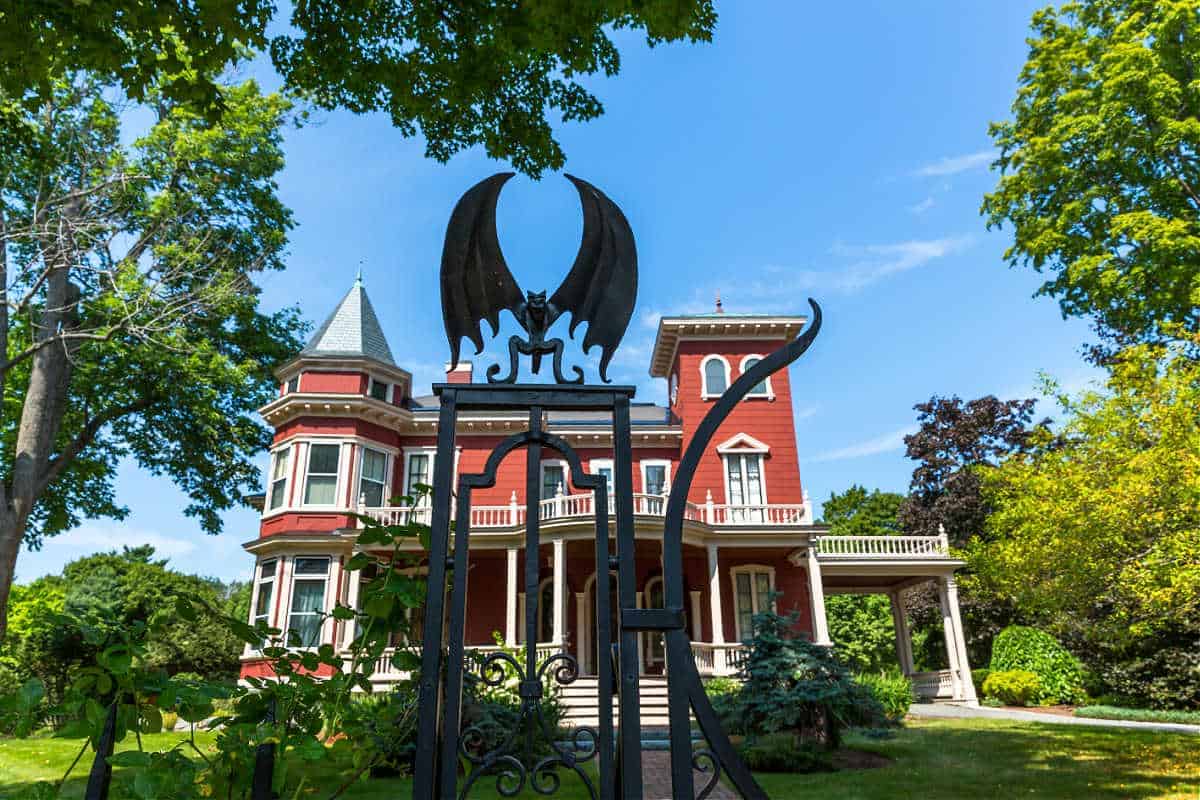
Stephen King currently lives in a beautiful Victorian mansion in Bangor, Maine. He has lived in Maine for most of his life and has even used it as a setting for many of his books. The house is on a quiet street known for its impressive wrought-iron fence and ornate features. Many of King’s most famous works are set in Maine, including “It,” “Pet Sematary,” and “The Shining,” to name just a few. The state has become such an important part of his writing that he’s often called the “King of Maine.”
Stephen King was born in Portland, Maine, on September 21, 1947. He spent his early years in Durham, Maine, before moving to Lisbon Falls, a nearby town where he spent most of his childhood. King has often talked about his formative years in Maine and how the small-town atmosphere and the surrounding wilderness influenced his writing.
Stephen King is an acclaimed American author, born September 21, 1947, renowned for prolific work in horror, supernatural fiction, suspense, and fantasy. His books have sold more than 350 million copies worldwide, and many have been adapted into successful films, television series, and miniseries. Notable works include “Carrie,” “The Shining,” “IT,” and “The Dark Tower” series. King has received numerous writing awards, including the Bram Stoker Awards, World Fantasy Awards, and the National Medal of Arts. His storytelling prowess has established him as one of the foremost authors in modern American literature.
Stephen King comes from a large family. His parents were Donald Edwin King and Nellie Ruth Pillsbury. King has an older brother, David, and a younger sister, Judith. His mother, Nellie Ruth Pillsbury, was a homemaker and worked part-time as a caregiver in a mental institution. At the same time, his father, Donald Edwin King, was a merchant seaman who left the family when Stephen was two years old. After his father left, King’s mother raised him and his siblings independently. Despite the family’s financial struggles, King has often spoken fondly of his childhood and has credited his mother with nurturing his love of storytelling and encouraging him to pursue his dreams. King is also married with children. He met his wife, Tabitha Spruce, at the University of Maine. They married in 1971 and have three children: Naomi King, Joe Hill, and Owen King. All three of their children are also writers, with Joe and Owen following in their father’s footsteps as successful authors. King often speaks highly of his family and has credited them with giving him the support and inspiration he needed to become one of the most successful authors ever.
About The Author
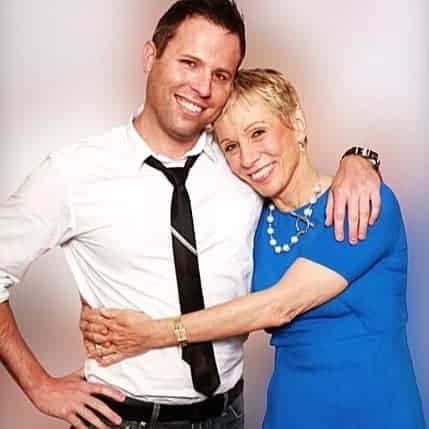
Jordan McAuley
Founder of Contact Any Celebrity with ‘Shark Tank‘ judge Barbara Corcoran
Jordan McAuley is the author of ‘Celebrity Leverage: Insider Secrets to Getting Celebrity Endorsements, Instant Credibility & Star-Powered Publicity,’ ‘Secrets to Contacting Celebrities: 101 Ways to Reach the Rich & Famous,’ & ‘The Celebrity Black Book: Over 56,000+ Verified Celebrity Addresses‘. He is featured by American Express OPEN Forum, CBS News, CNN, E! News, Entrepreneur Magazine, Fast Company, Forbes, FOX News, New York Post, USA Today, The Guardian, Tim Ferriss‘ The 4-Hour Workweek, The Mirror UK, The Wrap & more. He graduated from the University of Miami with Motion Picture Business and English Literature degrees from the School of Communication and College of Arts & Sciences. Jordan is a former 90s high school video store clerk who has lived and worked in Atlanta, Miami, Los Angeles, and New York City.
Stephen King’s Former Contact Information
Contact Stephen King plus 59,000+ celebrities, influencers, and public figures using our online database.
c/o Chuck Verrill, Darhansoff & Verrill Literary Agency, 275 Fair St #17D, Kingston, NY 12401; c/o Rand Holston, Paradigm Agency, 8942 Wilshire Blvd, Beverly Hills, CA 90211; c/o Andy Patman, Paradigm Agency, 8942 Wilshire Blvd, Beverly Hills, CA 90211; c/o Creative Artists Agency, 2000 Ave of Stars, Los Angeles CA 90067; c/o Charles Scribner’s Sons, 866 3rd Ave, New York NY 10022; c/o Tom Doherty Assoc, 175 5th Ave, New York NY 10010; 49 Florida Ave, Bangor, ME 04401; 24 N Casey Key Rd, Osprey, FL 34229
Bangor, ME, 04401